Play The Blame Game: It’s Toronto’s annual “what should I see?” documentary film festival.
The 2026 Hot Docs Canadian International Documentary Festival runs from April 23 to May 3, 2026 featuring 115 documentaries from 51 different countries. And I get it…that stat seems overwhelming. (TIFF is even worse with at least 300 movies.)
Never no worries, this My Pal Sammy edition is your amiable antinode to festival fatigue.
PUBLIC ACCESS
Director: David Shadrack Smith | 108 min
Saturday, April 25 | 4:15 p.m. TIFF Lightbox 2
Sunday, April 26 | 10:30 a.m. TIFF Lightbox 1

The revolutionary rise of a New York City public-access station, featuring provocative shows and early performances from musicians like Debbie Harry and Bob Marley, reveals how boundary-pushing programming reshaped free expression long before the internet.
~~
Ten Forward was a cult-classic local Star Trek-themed late-night call-in show that aired on community cable Channel 10 in Scarborough during the late 1980s and early 1990s. There’s a lot packed into that dense sentence.
The entire set was designed and lit up like a Star Trek bridge, the hosts dressed up in uniforms…it was strange and funny and terrible and earnest all at the same time.
While Fred Rogers began his career in public broadcasting in 1954 at WQED in Pittsburgh, the nation’s first community-owned educational television station.
As weird as Public Access TV has always been—from Ten Forward to Mister Rogers—there’s an endearing quality to the often odd programming.
That clumsy charm is the lost ingredient from so many TikTok and YouTube videos.
Over in New York City in the late ‘70s, Manhattan Cable Television, Channel J, and HBO were intrinsically connected through the early development of cable TV. Channel J was famously referred to as the “mutant son” of Manhattan Cable because it broadcast gay and straight porn, a swingers club called Midnight Interludes, as well as edgy sitcoms and more.
Woah…and all we got on Channel 10 was Star Trek dorks!
In his feature debut, Public Access, director David Shadrack Smith revisits Channel J’s colourful and filthy archives to tell the story of public-access television in ‘70s and ‘80s New York.
Yes, the obvious connection is the online evolution: “a pre-internet era where ordinary citizens could hijack television screens, presaging the modern landscape of influencers and content creators.”
However, Channel J was known to test the limits of the First Amendment and what could (and often couldn’t!) be broadcast. Which is a contemporary thread as we’re actively engaging with local issues such as school board book bans and free speech on university campuses.
In so many dumb ways, little has changed.
- Meanwhile, In My Summer Lair…
I’m always a fan of how did we get here? I spoke to Tricia Romano, author of The Freaks Came Out to Write. An oral history of The Village Voice. The classic New York City alternative weekly newspaper overlapped with Channel J’s timeframe. And like J it battled over taste and journalism and more. New York City used to be gritty.
I’ve artfully arranged my compelling Hot Docs suggestions and highlights in unique sections such as: The Blame Game. Steal This Story, Please! joins Public Access and The Ballad of Judas Priest.
Sammy Verdict: Feelings Are Not Journalism.
-28-
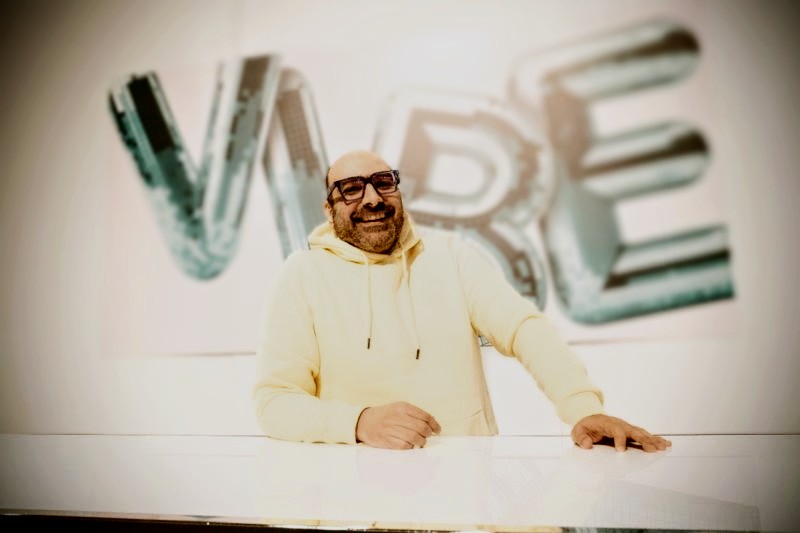
Sammy Younan is the affable host of My Summer Lair podcast: think NPR’s Fresh Air meets Kevin Smith: interviews & impressions on Pop Culture.